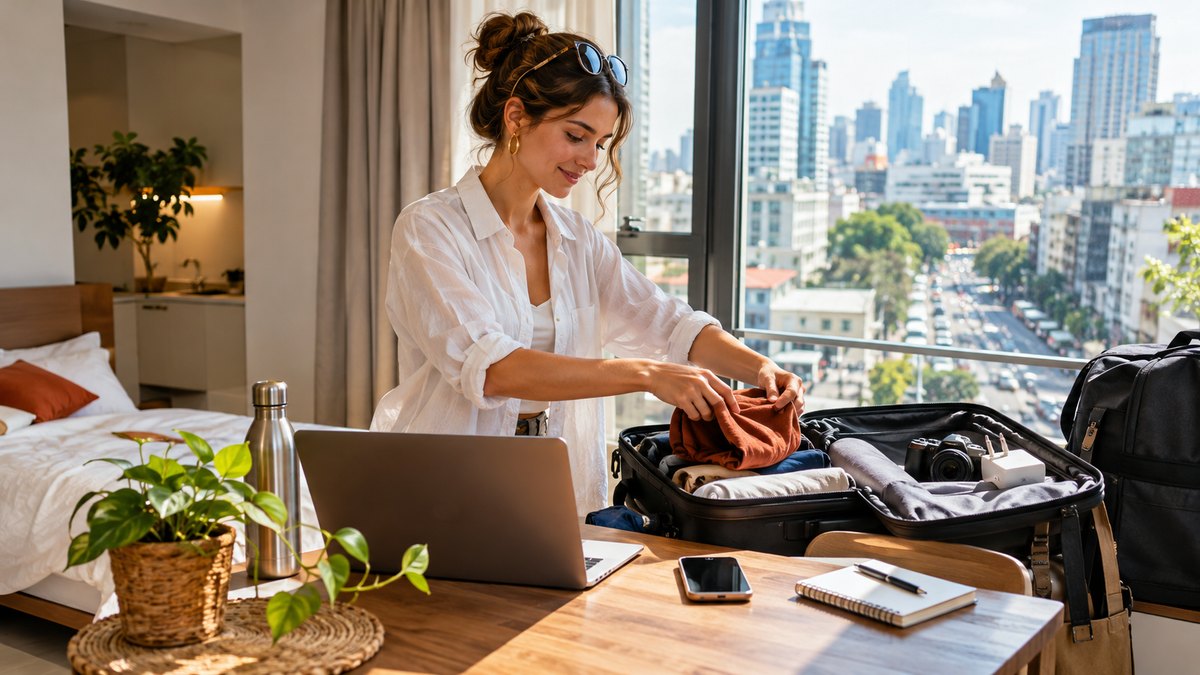
Before unpacking a vacation rental abroad, check access, safety, essential utilities and the promised amenities. Document existing damage and report serious problems promptly. A focused 30-minute inspection can prevent a week of avoidable disruption, especially if you work remotely.
Before arriving: save the promises
Keep an offline copy of the listing, booking confirmation, address, check-in instructions and cancellation terms. Highlight the amenities you actually need: a private bathroom, working air conditioning, hot water or a washing machine, for example. If you are still choosing a property, start with our monthly rental scam prevention guide. This checklist begins when you receive the keys.
Minutes 0–5: confirm access and safety
Check that you have the correct unit and that the entrance locks securely from both sides as intended. Confirm how to re-enter the building after reception closes. Locate the nearest usable emergency exits and look for smoke alarms. The US Fire Administration's accommodation fire safety guidance is a useful starting point. Never disable an alarm or attempt electrical repairs. If the unit presents an immediate danger, leave and contact local emergency services as appropriate.
Minutes 5–15: test the essentials
Run the shower and kitchen tap briefly, check drainage and hot water, flush the toilet, and operate the air conditioning or heating using normal controls. Check that the refrigerator is cooling and that advertised appliances are present. Look at bedding and bathroom cleanliness before using them. If a utility is unavailable, ask whether there is a scheduled interruption rather than assuming it will be restored.
Minutes 15–20: record the condition
Take a wide photograph of each room and close-ups of existing stains, broken furniture or damaged fixtures. Record the date, unit number and any meter readings relevant to your agreement. Avoid photographing other people or their private possessions. Keep originals on your own device, and send a concise condition report through the booking platform or agreed written channel. For a direct rental, request written acknowledgement from the landlord.
Minutes 20–25: check tomorrow's workday
Confirm that the advertised desk, chair, power outlets and internet access are available. Try a short connection test from the actual work area, not the corridor. If the property is noisy, note when it happens; a quiet afternoon does not guarantee a quiet night. Keep the wider first 48 hours arrival checklist for transport, connectivity and workspace planning after the room is accepted.
Minutes 25–30: decide whether to stay
Separate defects into three groups. Minor cosmetic damage needs documentation, not relocation. A missing essential amenity needs a written repair commitment and a realistic deadline. An unsafe or unusable property calls for immediate escalation and alternative accommodation. Do not wait until checkout to raise a problem that affects the whole stay.
How to report a problem without losing your evidence
State the booking reference, what was promised, what you found, when you discovered it and the resolution you need. Attach relevant photos or a short video. For Airbnb homes, the official rebooking and refund policy requires reporting qualifying reservation problems within 72 hours of discovery; eligibility and the remedy depend on the circumstances. Other platforms and direct leases have different terms. Report promptly rather than treating any deadline as a waiting period.
For example: the listing promised a functioning washing machine, but it will not start at check-in. Ask for repair by an agreed date or an appropriate alternative. Keep the conversation on the platform when booked through one, and retain receipts for any agreed expenses. Do not assume a replacement booking will automatically be reimbursed.
Keep a fallback for your first night
Before travelling, identify a nearby hotel with late check-in and save its contact details offline. Keep enough accessible funds for transport and a temporary room if possible. Do not book a non-refundable backup unnecessarily. The goal is to avoid negotiating from a position where you have nowhere safe to sleep.
What should you check before unpacking?
At minimum, verify secure access, emergency exits, water, toilet, temperature control, cleanliness and any amenities essential to your stay. Photograph existing damage and report material discrepancies in writing. If everything is acceptable, unpack and move on; the inspection is a practical safeguard, not a search for perfection.