For people with stable remote income and a tolerance for logistics, being a digital nomad is worth it in 2026: lower cost of living, real autonomy over your time and place, and a much wider life. It is not worth it if your income is shaky, or if you need deep roots, routine and a settled community to feel okay.
- Worth it if: your remote income is stable and you like solving logistical problems.
- Not worth it if: your income is precarious, or you need permanence and a fixed community.
- The lifestyle rewards slow travel — fast travel is where people burn out.
- Test it with a 60–90 day trip to one base before you give up your apartment.
The practical advantages
- Geographic arbitrage. Earning a Western income while your rent, food and healthcare cost a fraction of home is life-changing for your savings rate.
- Autonomy. You decide when you work, where you live, and what your week looks like. That freedom is hard to give back.
- A wider life. Languages, food, people and ideas you'd never have met from one city.
- Forced simplicity. Living from two bags resets your relationship with stuff and fixed costs.
- Career optionality. A remote skill set travels; you're not tied to one local job market.
The sustainable version rarely looks dramatic from outside: one base, a workable routine, a few dependable relationships, controlled costs and calm work.
The cons nobody puts on Instagram
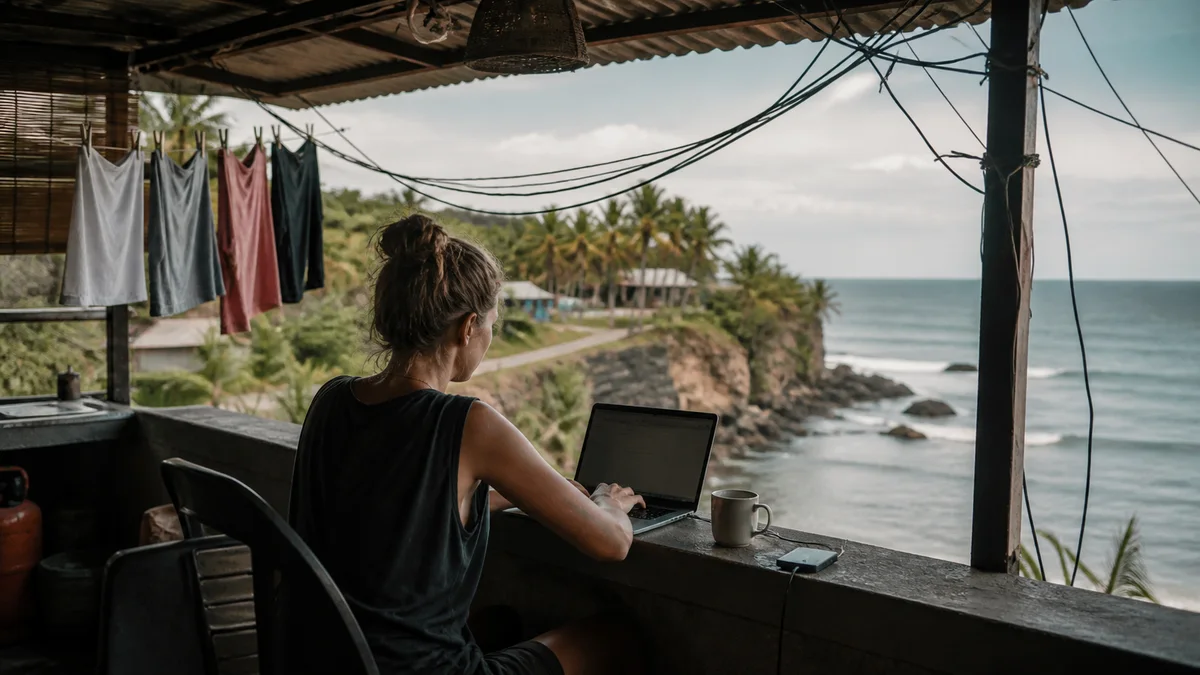
- Loneliness. Friendships need repetition; constant movement makes them shallow. It takes deliberate effort — see how to beat nomad loneliness.
- Admin load. Visas, taxes, insurance, housing, connectivity — it's a part-time job on top of your actual job.
- Financial fragility. One lost client abroad, with no local safety net, is stressful in a way it isn't at home.
- Career & pension continuity. Retirement contributions, healthcare history and professional networks all need active management.
- Relationships & family. Distance from parents, weddings and funerals missed, dating on a timer.
- Decision fatigue. Every month: where next, where to live, where to work, who do I know here.
Who it genuinely suits
- People with reliable remote income — salaried remote, an established freelance client base, or a profitable product.
- People who enjoy logistics and problem-solving rather than being drained by them.
- People who will slow down — a base per month or longer — instead of chasing a country a week.
- People who are proactive socially and will join things in week one.
Who should skip it (for now)
- Anyone whose income would collapse if one client or one platform changed.
- Anyone who needs a fixed community, family nearby, or a very stable routine to feel well.
- Anyone hoping travel will fix burnout — it usually moves it, not removes it.
- Anyone not ready to take the tax and visa side seriously.
How to test it before you commit
- Keep your job or clients. Don't quit anything to "become a nomad".
- Pick one budget-friendly base and book 60–90 days.
- Don't give up your apartment yet — sublet if you can.
- Live it like real life: work your normal hours, join a gym, cook, build a routine.
- At the end, review your money, work stability and mood honestly, then decide.
My first-90-days timeline is the detailed version of that test.
Compare cost, internet, safety and weather across 50+ nomad cities and shortlist three you'd actually enjoy.
Compare destinations →Nomad fit score
Score the life you would actually live—not the highlight reel.
Use it in three steps
Start Digital Nomad quick-reference card · editorial review: 31 August 2026.
Sources & official references
Always confirm rules and figures on the primary source before you act — these change often. Last reviewed August 2026.
- OECD — teleworking trends & wellbeing research
- Numbeo — crowd-sourced cost-of-living database
- Our World in Data — internet access & connectivity
- European Commission — EU Immigration Portal
- Our World in Data — life satisfaction & wellbeing
FAQ
Is being a digital nomad worth it in 2026?
For people with stable remote income who tolerate the admin and travel slowly, yes — the cost savings, autonomy and breadth of experience are real. For people with fragile income or a strong need for roots and routine, it often isn't.
What are the biggest downsides of being a digital nomad?
Loneliness and shallow friendships without deliberate effort, a constant admin load (visas, taxes, insurance, housing), financial fragility with no local safety net, and the effort of maintaining career, pension and family continuity.
How do I know if the digital nomad lifestyle is right for me?
Test it: keep your income, pick one affordable base, book 60–90 days without giving up your home, and live it like normal life — work your hours, build a routine, join a community. Then review your finances, work stability and mood honestly.
Does being a digital nomad save money?
It can, significantly, if you earn a Western income and base yourself in a lower-cost country while travelling slowly. Fast travel, frequent flights and short-term rentals erase most of the savings.
About the author. I'm Alexandre. I've been running an online business from Southeast Asia, Europe and Latin America since I left a desk job, and I write the guides on Start Digital Nomad from wherever I'm based that month. This is what I actually do — not theory — but I'm not a lawyer or a tax adviser, so treat the legal and tax sections as a starting point and confirm your own situation with a professional.