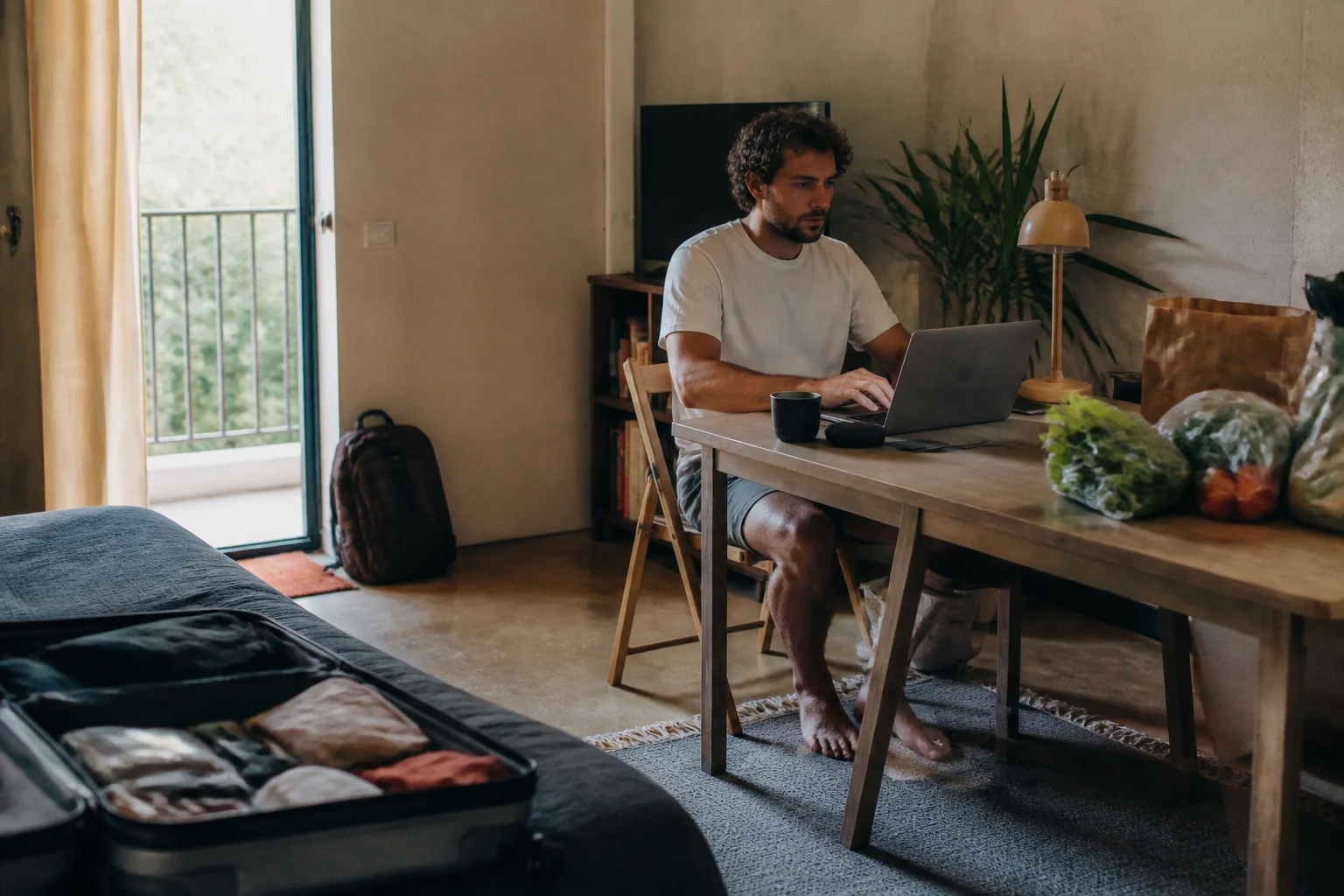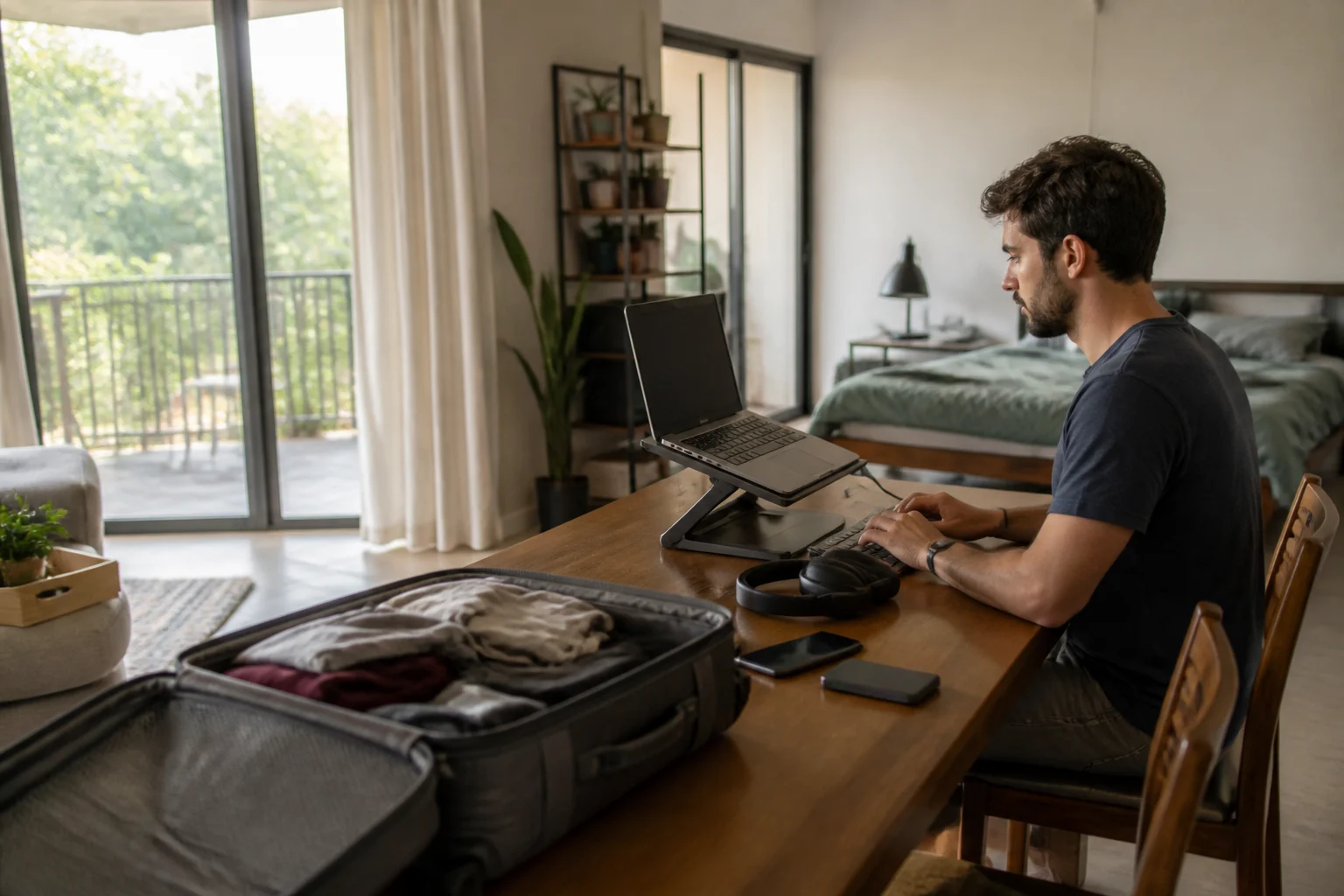
Health on the road is built from repeatable basics: sleep, movement, food, hydration and a plan for care when routines break.
- Walk every day
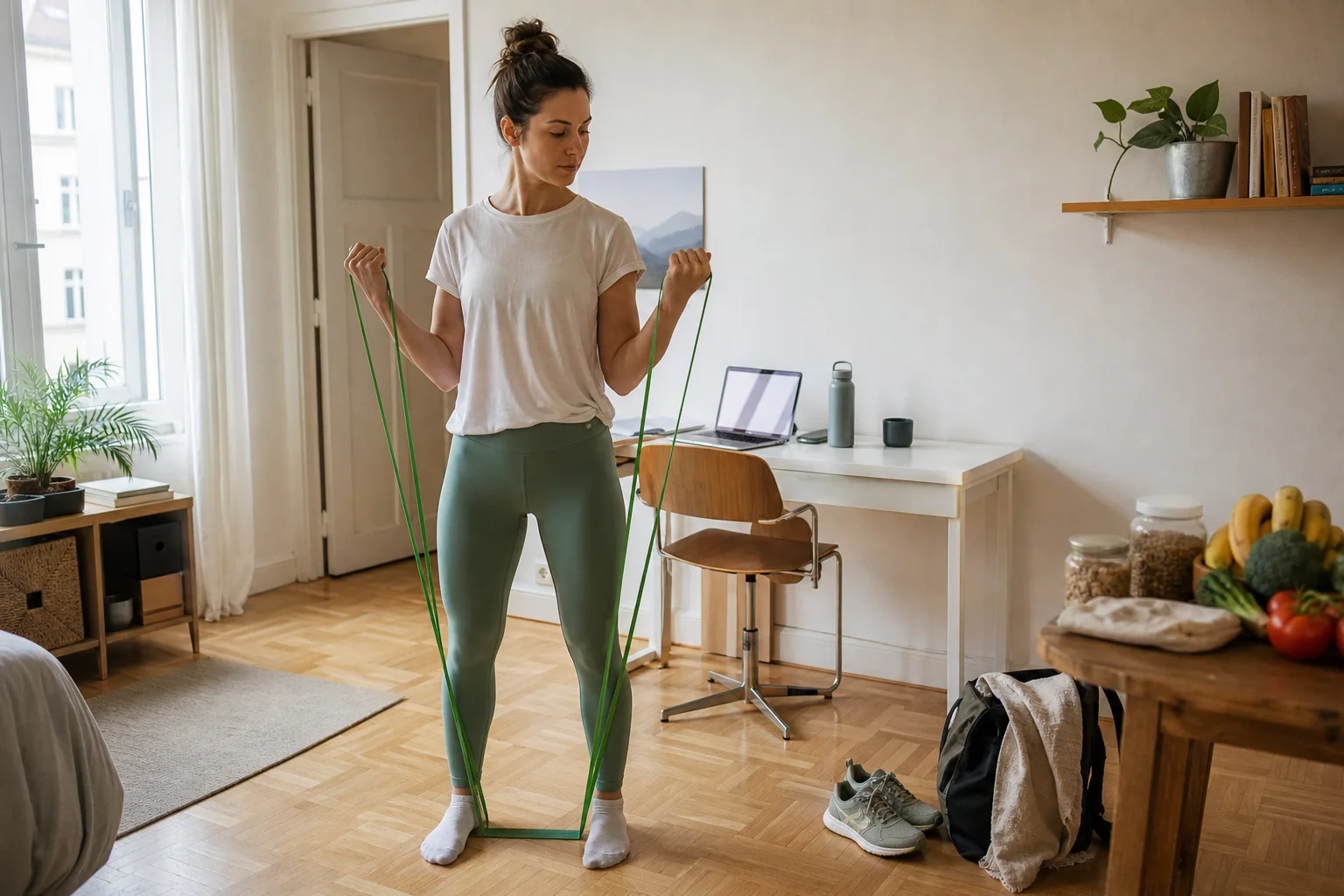
- Strength train with minimal equipment
- Keep a simple breakfast option
The portable routine
- Walk every day
- Strength train with minimal equipment
- Keep a simple breakfast option
- Protect sleep across time zones
When plans change
- Carry essential records
- Know local care options
- Buy suitable insurance
- Treat recurring symptoms early
Compare destinations by cost, internet, safety and lifestyle before you book.
Compare destinations →A practical checklist
Start small, document what works and review the decision after a real month of work rather than relying on a perfect plan.
Field notes: what changes the outcome
Build a health floor before setting goals: regular sleep opportunity, daily walking, two short strength sessions, basic groceries and continuity for prescriptions. This is general guidance; persistent pain, symptoms or mental-health concerns belong with a qualified clinician.
A realistic scenario
The all-or-nothing pattern starts with a new gym membership, then collapses on the next move. A 20-minute apartment routine and a walking route survive travel days. Gyms, classes and hikes can be added as bonuses instead of becoming prerequisites.
- Pack one light resistance band and learn a safe full-body routine before travelling.
- Buy breakfast and two simple meals on arrival day.
- Set movement reminders around calls rather than relying on motivation.
- Carry prescription copies and verify medicine rules before crossing borders.
- Track sleep, pain and energy weekly; stop treating exhaustion as a character flaw.
Health floor, not perfect plan
Protect the minimum that still works on travel weeks.
Use it in three steps
Start Digital Nomad quick-reference card · editorial review: 31 August 2026.
Sources & further reading
Check figures and rules against the primary source before you act — they change. Last reviewed August 2026.
- OECD — research on remote work / teleworking
- Numbeo — crowd-sourced cost-of-living database
- Our World in Data — internet access & connectivity
FAQ
What is the most important point about how to stay fit and healthy while traveling full-time?
Health on the road is built from repeatable basics: sleep, movement, food, hydration and a plan for care when routines break.
How should I start?
Choose one small experiment, set a clear budget or outcome, and review the result after two weeks.
What should I verify before relying on it?
Check current local rules, costs and conditions against official sources and recent first-hand information.
About the author. I'm Alexandre. I've been running an online business from Southeast Asia, Europe and Latin America since I left a desk job, and I write the guides on Start Digital Nomad from wherever I'm based that month. This is what I actually use and do — not theory.